That said, if the $399 starting price is out of your budget, the new Apple Watch SE offers many of the same features as the Series 6—including a handwashing timer, sleep tracking, heart rate notifications, and more—for $120 less. It lacks an always-on display and some of the Series 6's more advanced health features, however, including the ability to take an ECG and measure the oxygen saturation of your blood. It's a strong alternative to the Series 6 if you don't mind a less health-focused experience. It easily outperforms Google Wear OS-based watches like the Moto 360, and offers a much more fully realized smartwatch experience than Fitbit's more health-centric models. If you already own a Series 5, the Series 6 is really only worth the upgrade if you absolutely must have the always-on altimeter or SpO2 readings. There are some tradeoffs with the Apple Watch Series 3 because it is a much older model, such as a smaller display, an older chipset, and the lack of a compass, fall detection, ECG, and blood oxygen monitoring.

The Apple Watch 6 offers blood oxygen monitoring, a brighter always-on display, an always-on altimeter and a faster chip. Rival smartwatch manufacturers seem to be taking larger leaps forward with their products, while Apple sticks to its incremental process (and it's 18-hour battery life). Apple Watch Series 6 lets you measure your blood oxygen level with a revolutionary new sensor and app.¹ See your fitness metrics on the enhanced Always-On Retina display, now 2.5× brighter outdoors when your wrist is down. And with cellular service, you can go without your phone.² It's the ultimate device for a healthier, more active and more connected life. And with cellular service, you can go without your phone.³ It's the ultimate device for a healthier, more active, more connected life.

Note that the altimeter can be inaccurate in some weather conditions. The Apple Watch Series 7 offers the same health monitoring features available with the Series 6. A built-in accelerometer and gyroscope enable other important health-related features such as fall detection. Apple is late to the game with sleep tracking capabilities, as most smartwatches and fitness trackers already offer this feature, and Apple's version is still pretty basic. After you wear the Apple Watch to bed, the Health app on your iPhone shows when you fell asleep, woke up, and your total time in bed and asleep for the night.

It also shows a graph of your heart rate, with your maximum and minimum recorded beats per minute. It charts your sleep for the week and month, and shows your average time in bed and average time asleep. There are also FitBit models which are very similar to the Apple Smart Watch Series 6. FitBit Charge 4, Versa 2 and the FitBit Sense all have blood oxygen sensors, are also cheaper and more targeted to tracking fitness goals. The FitBit also has many other features similar to the Series 6, like playing music via Bluetooth while you run or making mobile payments on the go.

FitBits are fitness-focused and dedicated to motivating you and helping you find the right workout routine by making you aware of how physical you are or need to be. The FitBit sense has a battery life of 6 days in comparison to the 18 hours battery life of the Series 6, so working out every day won't mean constantly recharging your FitBit. Since the Apple Watch made its debut five years ago, one of its primary functions has been to help you monitor your health. The Series 6 further impresses thanks to a faster processor, a brighter always-on display, and an improved altimeter that can track your elevation changes in real time. The Watch SE, which shares design elements with the Series 6, along with key health and safety features like fall detection, starts at $279 for the GPS-only model or $329 for the GPS and cellular version.

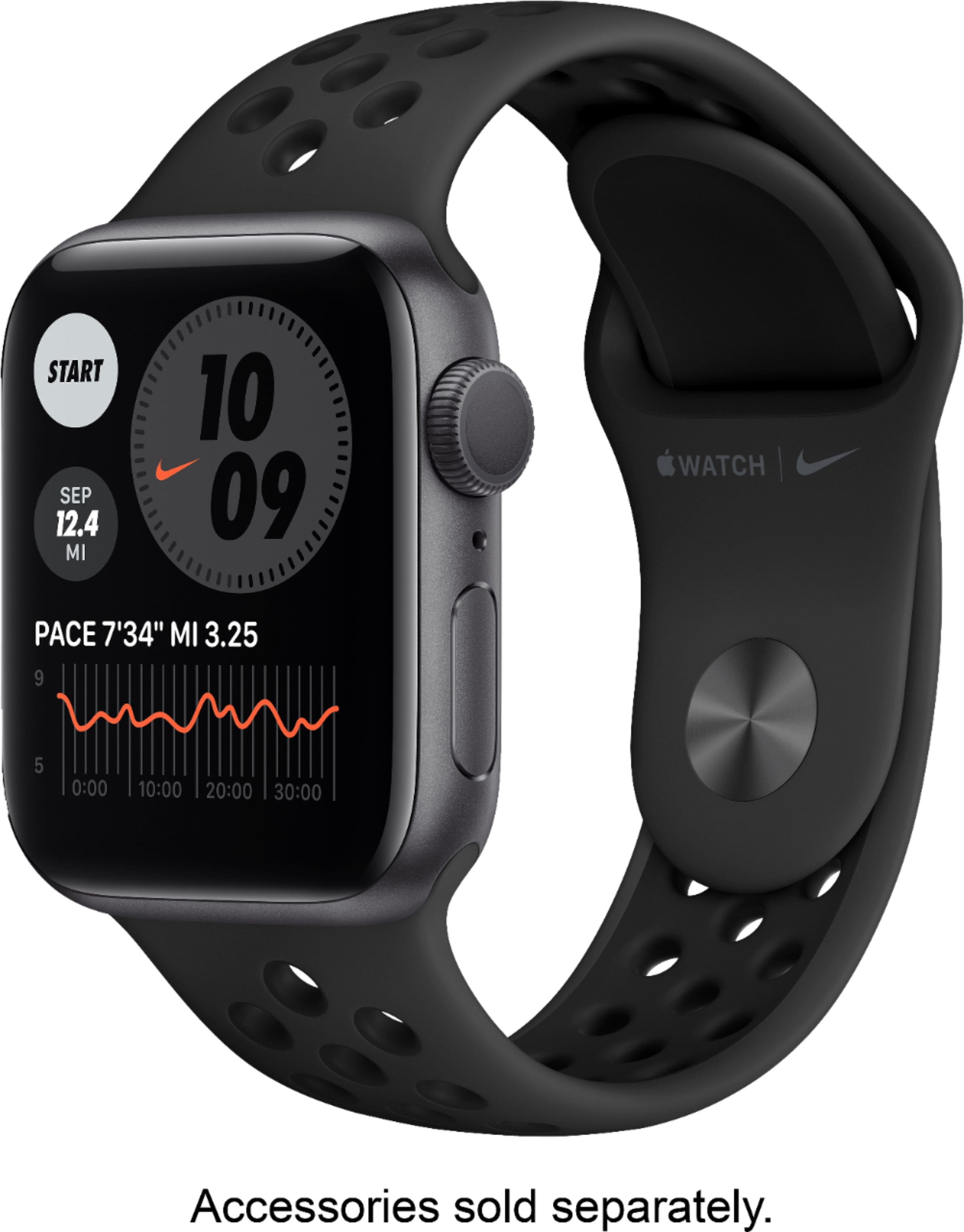
It lacks an always-on display, as well as blood oxygen saturation and electrocardiogram readings—we go into detail on the differences between the two watches here. The Apple Watch has been our longstanding Editors' Choice for its excellent performance, unparalleled app selection, and ample health and fitness tracking features. Keep an eye on your health and all your notifications with the Apple Watch Series 6 40mm Space Gray Aluminum Black Sport Band. The Apple Watch measures the oxygen level in your blood using the blood oxygen sensor. Based on this data, the Apple Watch provides insight into your fitness and your stress level.

Thanks to breathing exercises and mindfulness, you can lower your stress level with the Apple Watch. The Always-On screen shows you your most important notifications throughout the day. Even when the sun shines on display, because the screen of the Watch 6 is screen is brighter than that of its predecessor.

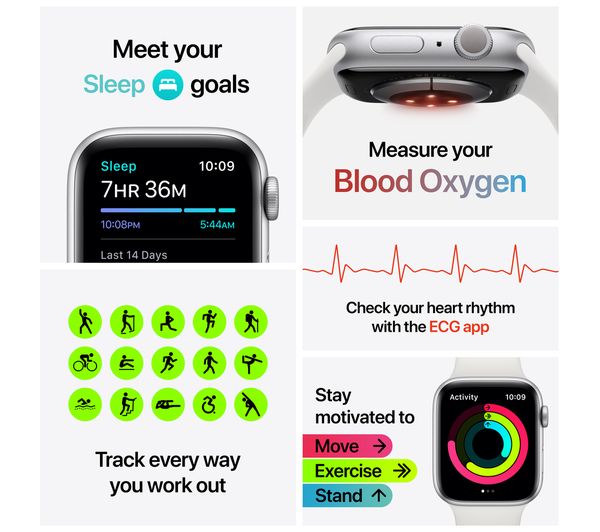
You can wear the Apple Watch at night and you'll see exactly how long you slept the next day. The Series 6 has all the excellent health, safety, and lifestyle features of its predecessor. These include ECG readings, high and low heart rate notifications, irregular heart rhythm notifications, menstrual cycle tracking, fall detection, high decibel alerts, emergency SOS, and international emergency calling. The watch's Move, Exercise, and Stand rings are a personal favorite, as they help motivate me to stay active on a regular basis and cheer me on when I do.
The Apple Watch Series 6 doesn't add a tonne of new features over the Series 5, but there are some notable ones such as blood oxygen monitoring, dual-band Wi-Fi, and the power-efficient S6 chip. A lot of the other features such as sleep tracking, hand washing, etc are available on the Apple Watch Series 5 too, after updating to watchOS 7. Upgrading from the Series 5 to the Series 6 doesn't make a whole lot of sense, and if you were thinking of doing this just for the blood oxygen monitoring, I'd suggest saving your money and buying an actual pulse oximeter instead.
New features exclusive to the Series 6 include the blood oxygen sensor, which checks your oxygen levels and an updated 6S SiP U1 chip that allows you to connect to other Apple Smart Watches and other Apple devices with U1. The Series 6 now also works up to 20% faster than the previous Series 5, making it the fastest Apple smartwatch yet. For extra convenience, the Series 6 now has an Always-On Retina Display, so you don't have to tap the screen to check the time. The Apple Watch can now charge 33 percent faster charging compared with Apple Watch Series 6 thanks to a new charging architecture and Apple's Magnetic Fast Charger USB-C Cable and an 18W or higher power adapter. This means that just eight minutes of charging time can provide up to eight hours of sleep tracking.

The Magnetic Fast Charger USB-C Cable ships with the Apple Watch Series 7, but users will need to supply a 20W or higher power adapter to get fast charging. It's the ultimate device for a healthier, more active, more connected life. Fitbit's latest smartwatches may offer fewer features than the Apple Watch, but they deliver battery life of three days or longer, which comes in handy when you're tracking sleep.
The Series 6 has slightly faster charging — in my tests it was charging from zero to 100 percent in a little over two hours, while the Series 5 hit 80 percent. That's a fairly minor bump, but it is marginally useful since more people will be looking to charge it at in-between times so they can take advantage of the new sleep tracking features in watchOS 7. Angela Moscaritolo is PCMag's expert on fitness and smart home products.
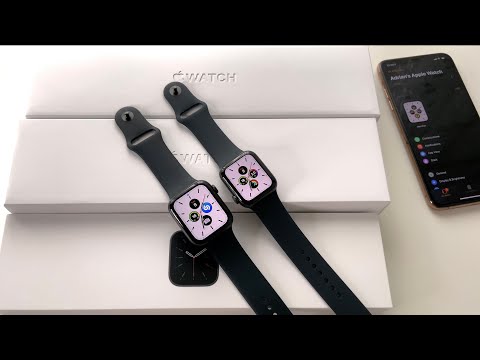
Angela also tests smart home devices from her ranch in Florida, including air purifiers, kitchen appliances, and robot vacuums, just to name a few. Created to provide you with even more health features, Apple Watch Series 6 now enables you to track your blood oxygen as well as your workouts. The handy always-on retina display has been updated, so it's now 2.5 times brighter outdoors to help you see when you've hit your targets, and it's all powered by a faster, S6 64-bit dual-core processor.

I switched from the Series 3 to a Series 6 and I'm really happy with it. It is much faster, has an always on display and the screen is much brighter than its predecessors. Unfortunately, the design has remained the same as its predecessor and this is a shame because I would have preferred a new design. The new function to measure your blood oxygen does not work very well, you often get a message that the measurement has failed. I expected that this would work just as well as with the heart rate monitor that does measure your heart rate in 1x, but otherwise I think it's a top watch.
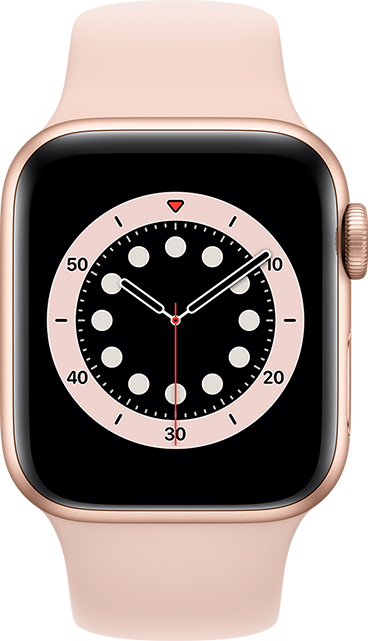
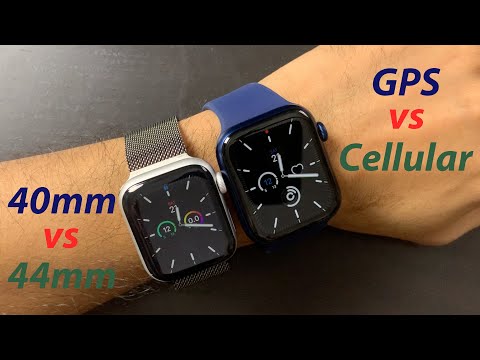
Upgrading from the Series 5 to the Series 6 just seems a bit redundant to me given that little has changed, but if you own a Series 3 it is definitely recommended to switch. On the downside, watchOS' sleep tracking feature could definitely use some work, as it's pretty rudimentary in its current state - especially when compared to the likes of Fitbit. Another big minus is the Apple Watch's ECG function and irregular heart rhythm notifications, both of which have finally been approved by the TGA but haven't made their way onto the device just yet. The design is simple and practical, but it's also quite beautiful, too. Series 6 also introduced a larger range of watch bands, which make the Apple Watch more versatile than ever. I tried the 40mm model with the sport band and the sport loop band, both of which felt comfortable and secure.
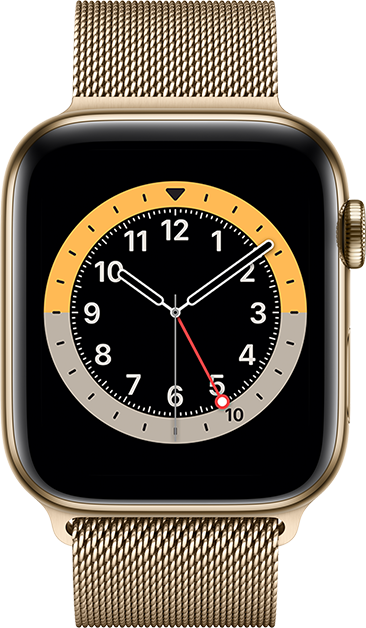
This year, Apple also dropped the new "solo loop" band, a clasp-free, ultra-stretchy band available in nine wrist sizes. The build quality of the Apple Watch Series 6 is fantastic, especially the stainless steel version that I have for review, but it's also a massive fingerprint magnet. The right side of the watch has the digital crown and a single button just below it. There's a cutout for a speaker on the left, and the health sensors are on the underside of the case. My watch came with a black sport band, which is made out of silicone and is one of the most practical bands to own since it's quick to dry and requires very little maintenance. The aluminum Apple Watch models feature Ion-X glass to protect the display, while the stainless steel and titanium models use sapphire crystal glass.

Sapphire crystal glass offers better scratch resistance than Ion-X glass because it is a harder material, which means the models with sapphire crystal models are more resistant to scratching and everyday wear. All Apple Watch Series 7 models feature a black ceramic and crystal back that houses four LED clusters and four photodiodes to facilitate health-monitoring features such as heart rate monitoring, blood oxygen monitoring, and ECGs. Apple Watch Series 4, which launched a year later, featured a major redesign with a screen that was 30% bigger in both models and a 50% improvement on its processor over the Series 3 version. Speakers and microphones were rearranged so they were louder and more useful, and Series 4 introduced the fall detection feature, ECG capabilities, and the second-generation heart rate monitor.

The Fitbit Sense and Fitbit Versa 3 are strong competitors if general health and fitness are what you're interested in. The Sense in particular is designed around matching heart rate and pulse oxygen with strong sleep tracking features and stress levels, to help you understand how different parts of your life affect each other. It's cheaper than the Series 6 too, but isn't as nicely made, and doesn't work as slickly with your iPhone. Specialized devices definitely get better battery, because they do less.

You could still have a feature phone with amazing battery, but most the market voted for generalized smartphones with much shortened battery life. Bought as a must-have, but has real added value; I use my phone much less now . The battery life was disappointing in the first few days, but now that use has normalized you can easily last a day (sometimes more than 50% at the end of the day), so that's doable. Coolblue was able to deliver much earlier than Apple itself (weeks earlier...) so bought here. We'll get to the new blood oxygen monitoring capability in the next section, but first let's quickly cover the rest of the new features and software on the Apple Watch Series 6.

It now has an always-on altimeter which can give you a real-time reading of elevation directly on your watch face through a complication. It lets you access the notifications (swipe-down) or the Control Centre (swipe-up) directly from the always-on display, without having to lift your wrist up to wake it. If you own an iPhone, the only smartwatches you should be looking at are the various Apple Watch models. Even though you can use smartwatches from many other brands with an iPhone, none of them offer the same level of integration, in my opinion. Like clockwork, we got the Apple Watch Series 6 this year, and it features a new S6 SiP (System-in-Package) and a blood oxygen sensor, plus other small refinements.

This year's refresh is yet another iterative one over the Apple Watch Series 5, which has been discontinued. All Hermès models feature a silver or space black stainless steel Apple Watch body paired with one of the Hermès signature hand-crafted leather bands and an additional orange Hermès-branded Apple Watch Sport band. Hermès Apple Watches include unique watch faces based on Hermès watch designs. With the Series 7, there are color updates across the Classic, Attelage, and Jumping styles, as well as two brand new Circuit H and Gourmette Double Tour styles.
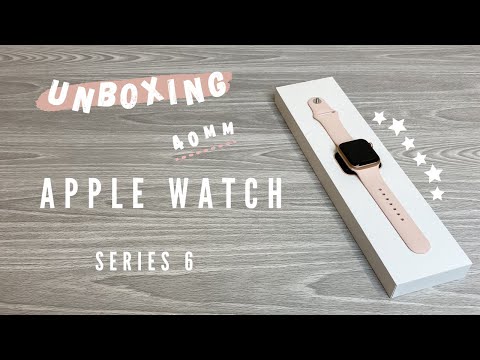
Apple is by no means the first company to integrate SpO2 monitoring into its health features, but you can bet if it's ready to release its own implementation, the company believes it got it right. I recorded 99% or 100% blood oxygen levels, which matched the readings I received from a traditional, finger-based pulse oximeter. Aside from fast charging and the display the Apple Watch 7 offers no new health features compared to the Series 6, aside from improved fall detection, so if health is your main concern you will probably be fine with the Apple Watch 6. Typical smartwatch features aside, it's the health features that really make the Series 6 stand out. I found these goals far easier - albeit still challenging - to hit than those given to me by other smartwatches. If there's one thing the Apple Watch does well, it's motivating me to get off my lazy butt.
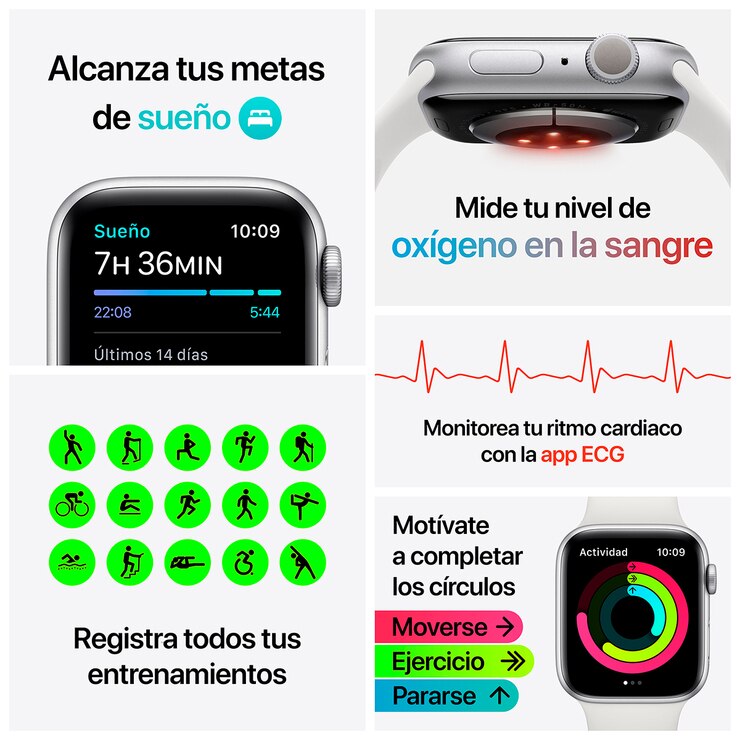
The Apple Watch Series 6 also has built-in sleep tracking, which is linked to the Bedtime feature in the Clock app. The app tracks your average time in bed and average sleep time, measures your heart rate, and presents this data as a bar graph, broken up by week or month. Light green markings indicates time in bed, while darker green indicates actual sleep time. In my experience, the data seems quite accurate, especially the start and end times that the watch records. The OLED display on the Apple Watch Series 6 is one of the best you'll come across on a smartwatch. It measures about 1.73 inches diagonally and has a resolution of 368x448 pixels on the 44mm case models.

Apple also uses a sapphire crystal glass cover on the stainless steel variants, and the brightness of the always-on display is now 500nits, compared to 200nits on the Series 5. The watch itself weighs 47.1g and is waterproof up to 50m, so you can swim with it. The downside is that the sleep analysis is surprisingly light on detail compared with rivals. The Apple Watch will tell you how much time you spent asleep, your average this week compared with the previous week and that's pretty much it. The Fitbit Sense, for example, will tell you how much deep, light and REM sleep you got, what your heart rate variability was and give you an overall score based on those details among other things. Polar's sports watches do something similar, basing sleep quality on sleep stages and heart rate data.

The Apple Watch Series 6 was Apple's flagship smartwatch from October 2020 to September 2021. Available in aluminum, stainless steel, and titanium, it featured for the first time a blood-oxygen sensor and a brighter always-on display. The company ditched the smartwatch for its successor, the Apple Watch Series 7. By contrast, Apple's watches have delivered about 18 hours' worth of battery life. That's enough to get you through the day, but the device is often running on fumes by bedtime, especially if you track your workouts and add a few cellular calls. It has very good fitness and health tracking, and Apple's Health app keeps that information secure and private unless you purposefully share it.

It integrates so well with the iPhone that it puts other smartwatches at a disadvantage — but that still means it has great support for iMessage, phone calls, Apple Music, and the rest. And for simple, basic smartwatch features like notifications and useful watch faces, watchOS 7 is second to none. The Apple Watch now does native sleep tracking, but I might end up sticking with a third-party app for that. Apple's system is built in, but it pushes you into using Apple's wind-down bedtime feature.

I find its bedtime reminders restrictive and sometimes even patronizing — it's worse than my parents were when I was eight and stayed up too late reading with a flashlight. Anyway, watchOS 7's sleep tracking reports are also less detailed than what you can get from a third-party app or even from another smartwatch like the Withings HR. The rest of Apple's comprehensive health and fitness-tracking features from previous generation Apple Watches return. The Series 6 will track many different sports and has long enough battery life to see most through a marathon. Note you can play music from Apple Music straight from the watch without your phone but not Spotify.
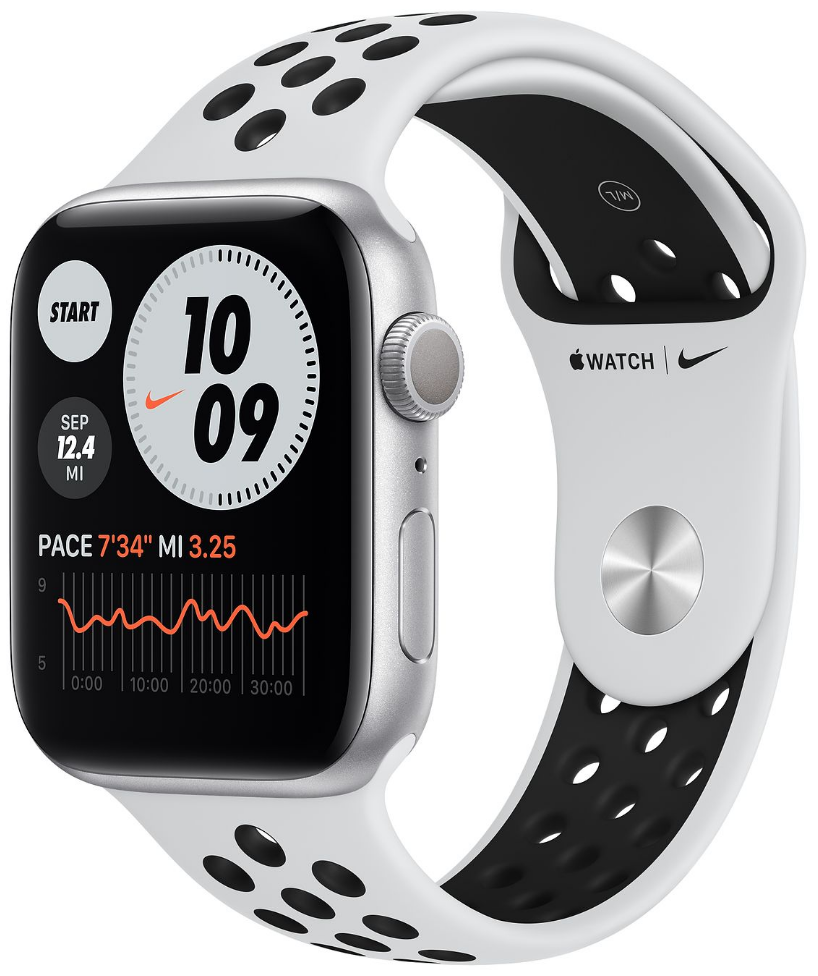
For £269/$279/AUS$429, you get the same design but in aluminium only; same screen but without the always-on display; and same health and fitness features but without the ECG and pulse oxygen sensor. It's a really great device overall, and if you're looking at your first Apple Watch in particular and don't want to spend as much as the Series 6 costs, it's an extremely strong choice. No longer will you need one of the best Apple Watch apps for sleep tracking. It's not as insightful as Fitbit's snooze-monitoring software, but it successfully emphasizes the benefit of setting sleep goals and establishing a bedtime routine. If you're the kind of person who loves closing your activity rings, you'll appreciate the challenge that comes with achieving 7 hours of sleep.

After testing the beta version of watchOS 7 on my Series 5 for more than a month, the handwashing countdown timer has become a necessity in my life, especially in light of COVID-19. The watch uses motion sensors to detect handwashing movements and the microphone to listen for the sound of running water. When it detects that you're washing your hands, it displays a 20-second timer on the screen, so you don't have to silently hum Happy Birthday twice in your head.
When you're done, the watch slightly vibrates and gives you a thumbs up on the screen. According to Apple, the Series 6 offers the same 18-hour battery life as the Series 5, but drains less battery when streaming music and tracking certain workouts like indoor and outdoor runs. After wearing it for a full 24 hours, it still had 14 percent battery left. During that time, I had the always-on display mode enabled and used the watch to track a 37-minute run with GPS.